.webp)

Samburu Research Camp | Kenya | New Build & Renovation | 1000 sqm
Project Description
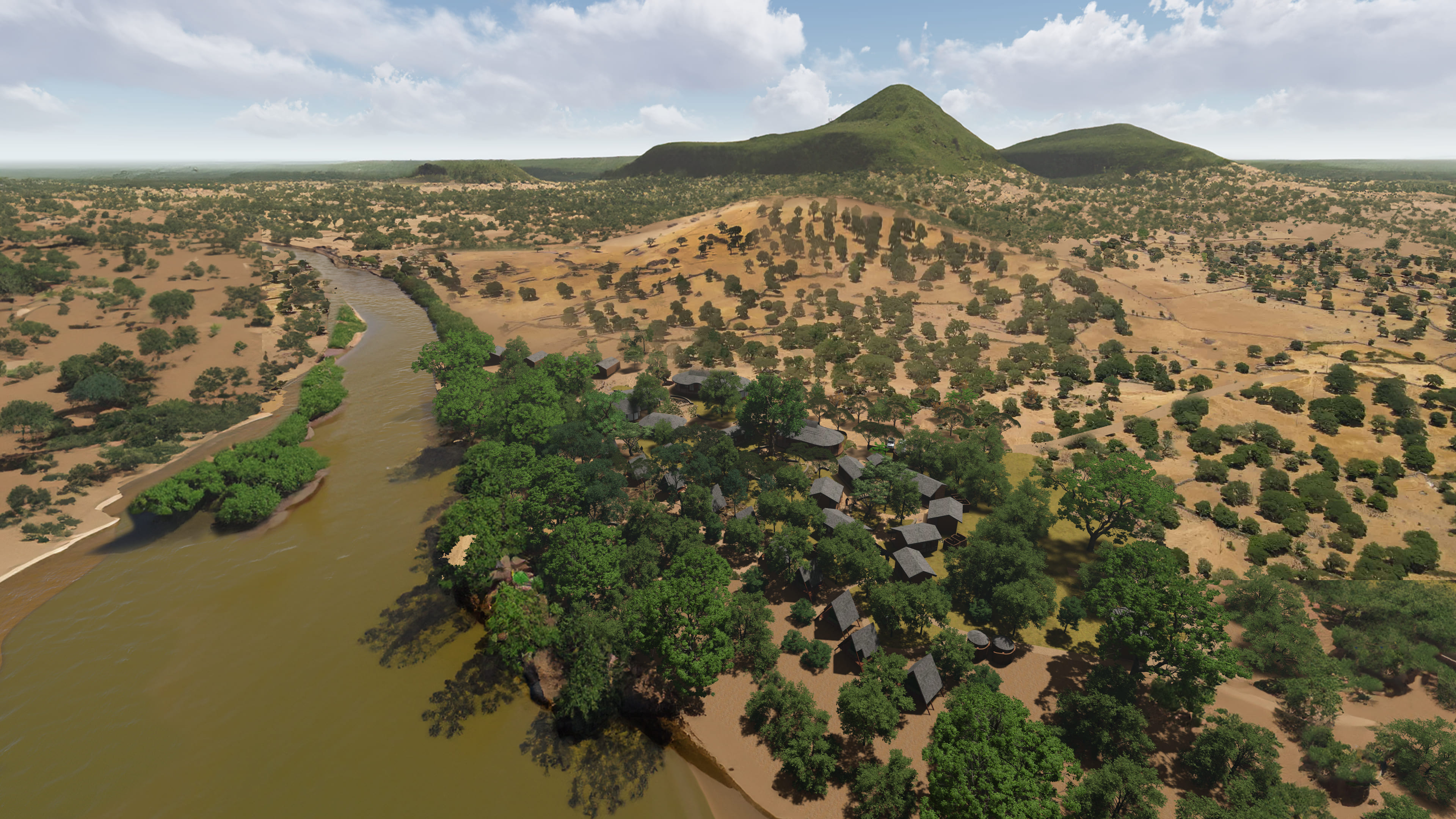
In the heart of Samburu National Reserve, where elephants roam and temperatures swing dramatically between day and night, architecture must do more than shelter -it must work with nature.
For over 30 years, Save the Elephants, founded by Iain Douglas-Hamilton, has been at the forefront of elephant research and conservation. Their camp in Samburu is not just a research base - it is a gateway into understanding one of the most intelligent and complex species on Earth.
When designing the new facilities, the question was simple:
How can we create a comfortable, healthy workspace in a remote, hot, and dry climate - with no mechanical cooling or heating systems?
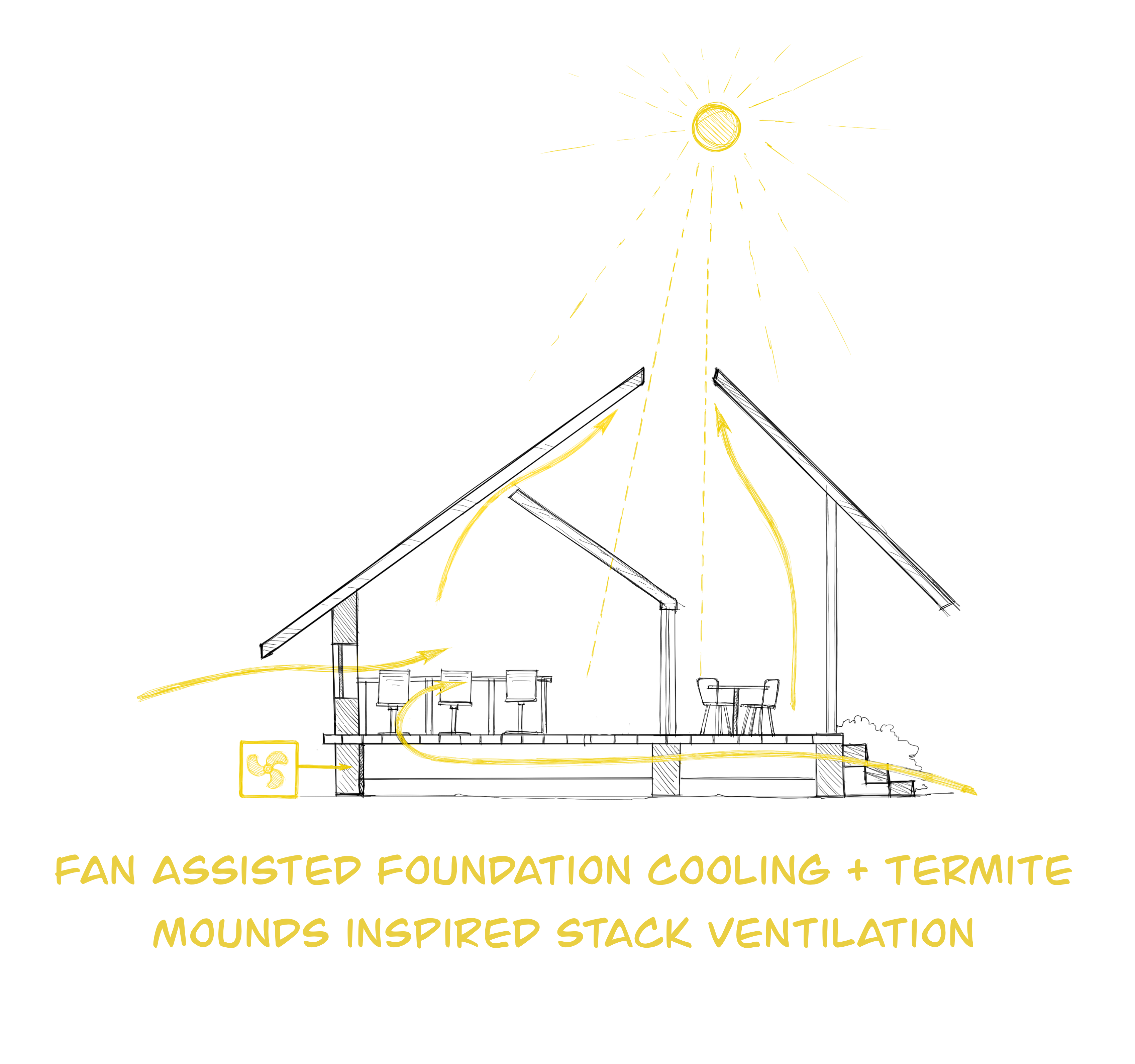
The answer came from nature itself. Termite mounds, common in the region, maintain stable internal temperatures through natural airflow and thermal mass. This principle became a principal element for the design.
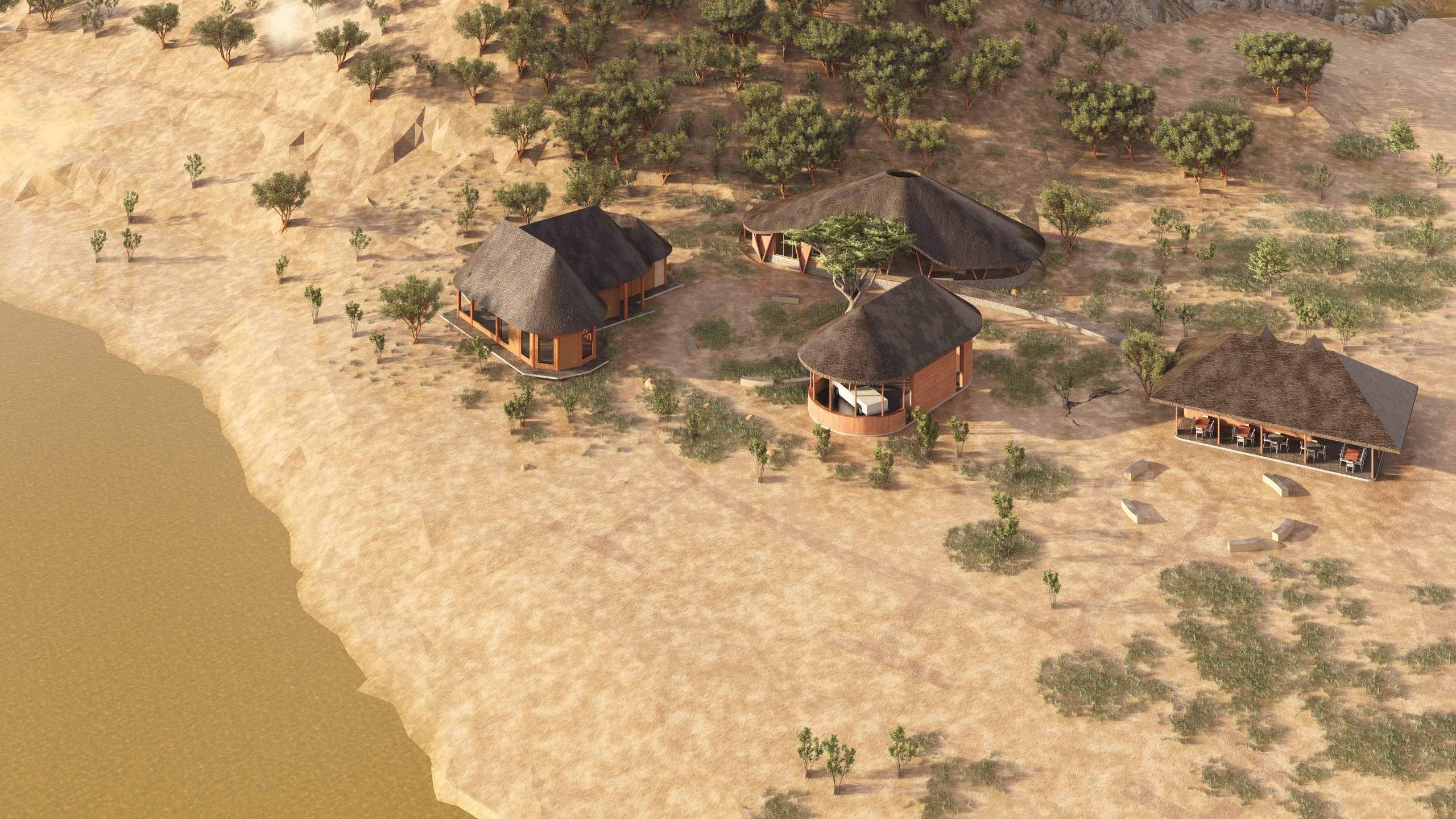
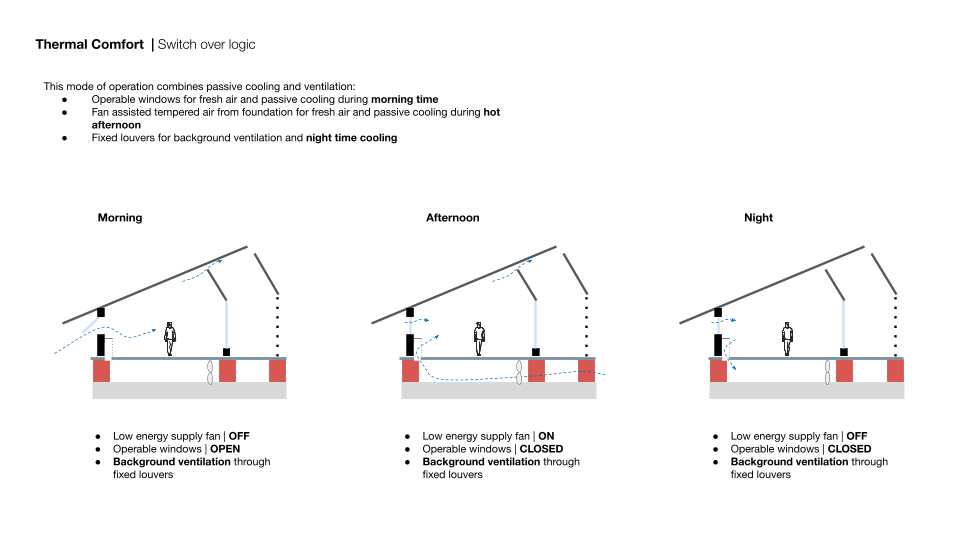
The building is carefully oriented along the north–south axis, minimizing harsh solar exposure while allowing for controlled daylight. Deep overhangs from a thatched roof shade the walls, while openings on opposite facades enable cross ventilation, allowing cool morning air to flow through the space.
As the day heats up, the building shifts strategy. High-level louvers allow hot air to rise and escape, supporting stack ventilation and preventing heat build-up indoors.
One of the exciting features lies beneath the building. Raised above the ground to prevent flooding, the structure creates a shaded plenum where air is naturally cooled by the earth and heavy stone foundation. This natural cooling effect was further enhanced by creating a simplified labyrinth path for the air within the foundation
This tempered air is gently drawn into the space using low energy supply fans through discreet floor grilles, providing a passive cooling effect exactly when it is most needed: during the hottest hours of the day.
The use of rammed earth walls and a makuti (thatched) roof is not only a nod to local craftsmanship but a high-performance environmental strategy.
- Earth walls store heat during the day and release it at night
- The thick thatched roof provides natural insulation
- Local materials reduce environmental impact and enhance resilience
The building adapts throughout the day:
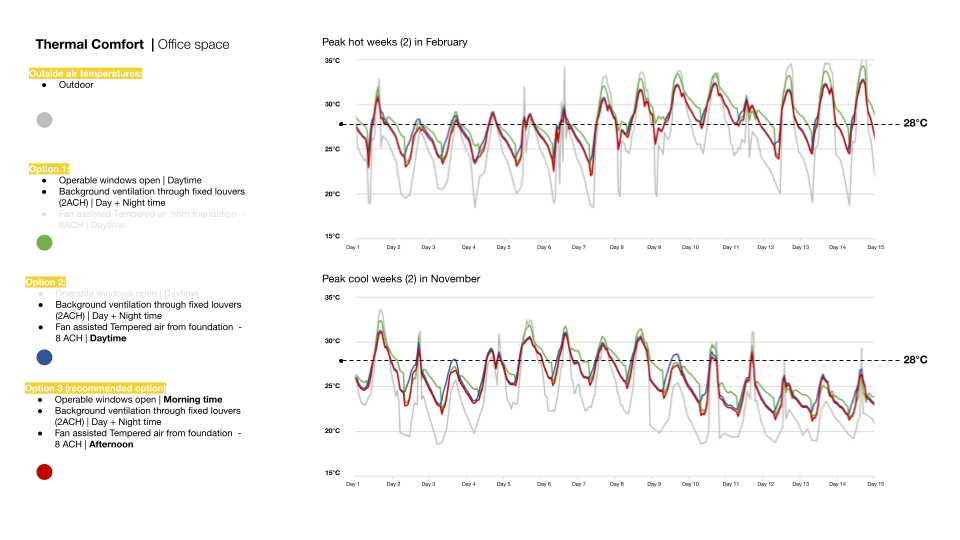
- Morning: Open windows invite fresh air and cool breezes
- Afternoon: The building closes up, relying on cooled air from the foundation
- Night: Stored heat is released through high-level openings, resetting the building for the next day
In a place where resources are limited and nature is abundant, the design proves that comfort does not have to come at the cost of energy.
Project Info
Location:
Samburu, Kenya
Client:
Save the Elephants
Architect:
MASS Design Group
Area:
1000 sqm
Year:
2026
Status:
In Progress
Photos:
Courtesy of MASS Design Group (1-3)
Services
Facade Design
Daylight
Natural Ventilation
Thermal Comfort
Low Energy HVAC
Mechanical Design
Electrical Design
Awards
.jpg)


.svg)
.svg)

.svg)